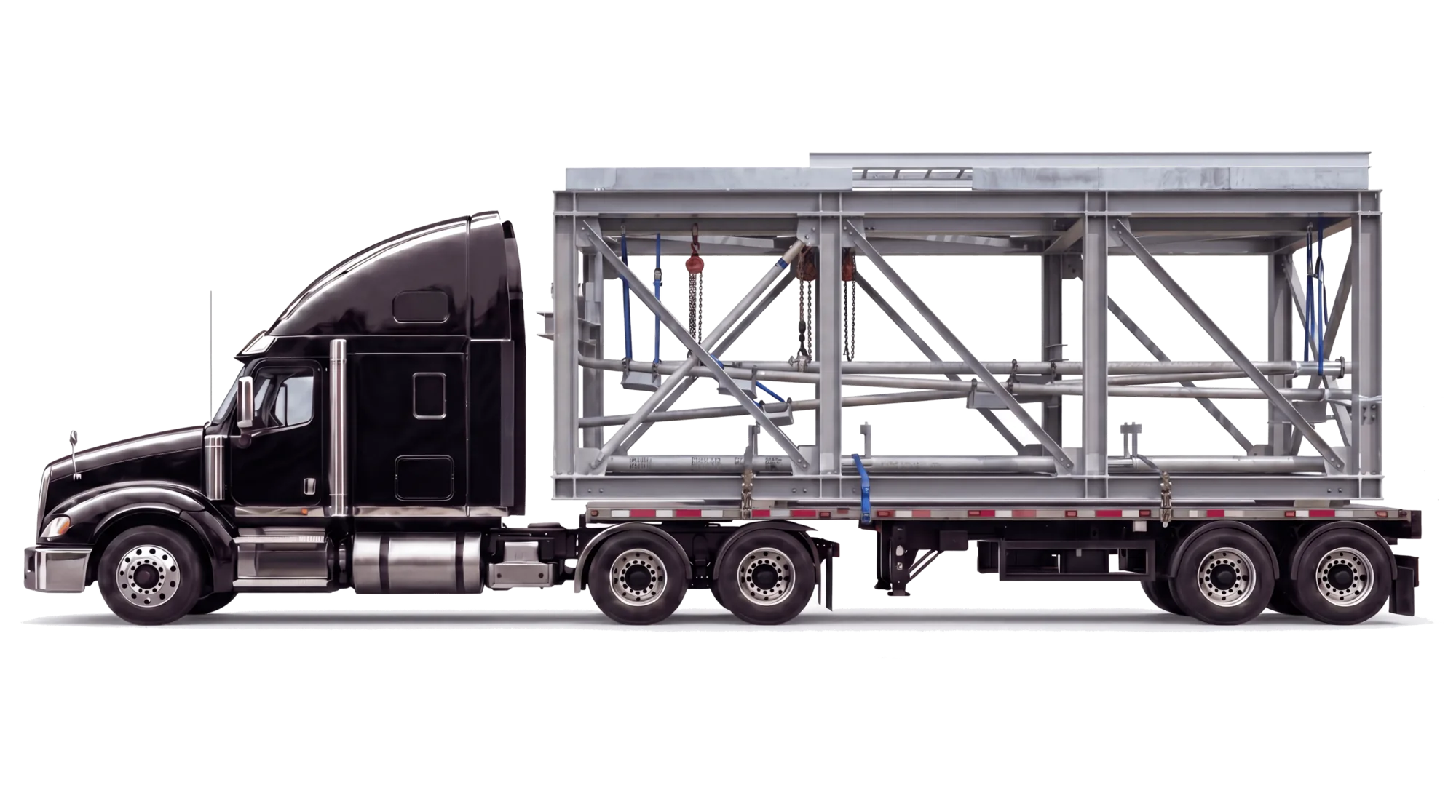
Flatbed
The standard open deck.
Steel, machinery, and building materials on an open deck, loaded by crane or forklift from any side. Suited to freight up to around 48,000 lbs that fits within legal height.
Shipyard and port freight
Oversized marine sections moved between yards, ports, and project sites

Operated by Rite Way Freight LTD
Hull blocks and deck modules move whole, on equipment sized to the section.
Moves are coordinated with terminal procedure and the receiving site at the other end.
Container pickups are timed to arrival so boxes clear the yard before storage charges start.
Hulls, marine components, and port-to-site heavy lift for shipyards and marine projects.
Shipbuilding freight is dictated by the yard. Hull sections and deck modules are built to a schedule and lifted into place in a fixed order, so a delivery that arrives early takes up space the yard needs and one that arrives late holds up the lift. Moves are planned around the crane rather than around the road.
We also move freight between ocean ports, rail terminals, and inland destinations, scheduling pickups to reduce demurrage and detention charges. That covers container and breakbulk drayage as well as the oversized sections — the same file often has both.
The trailer classes hull sections and marine equipment move on.
The standard open deck.
Steel, machinery, and building materials on an open deck, loaded by crane or forklift from any side. Suited to freight up to around 48,000 lbs that fits within legal height.
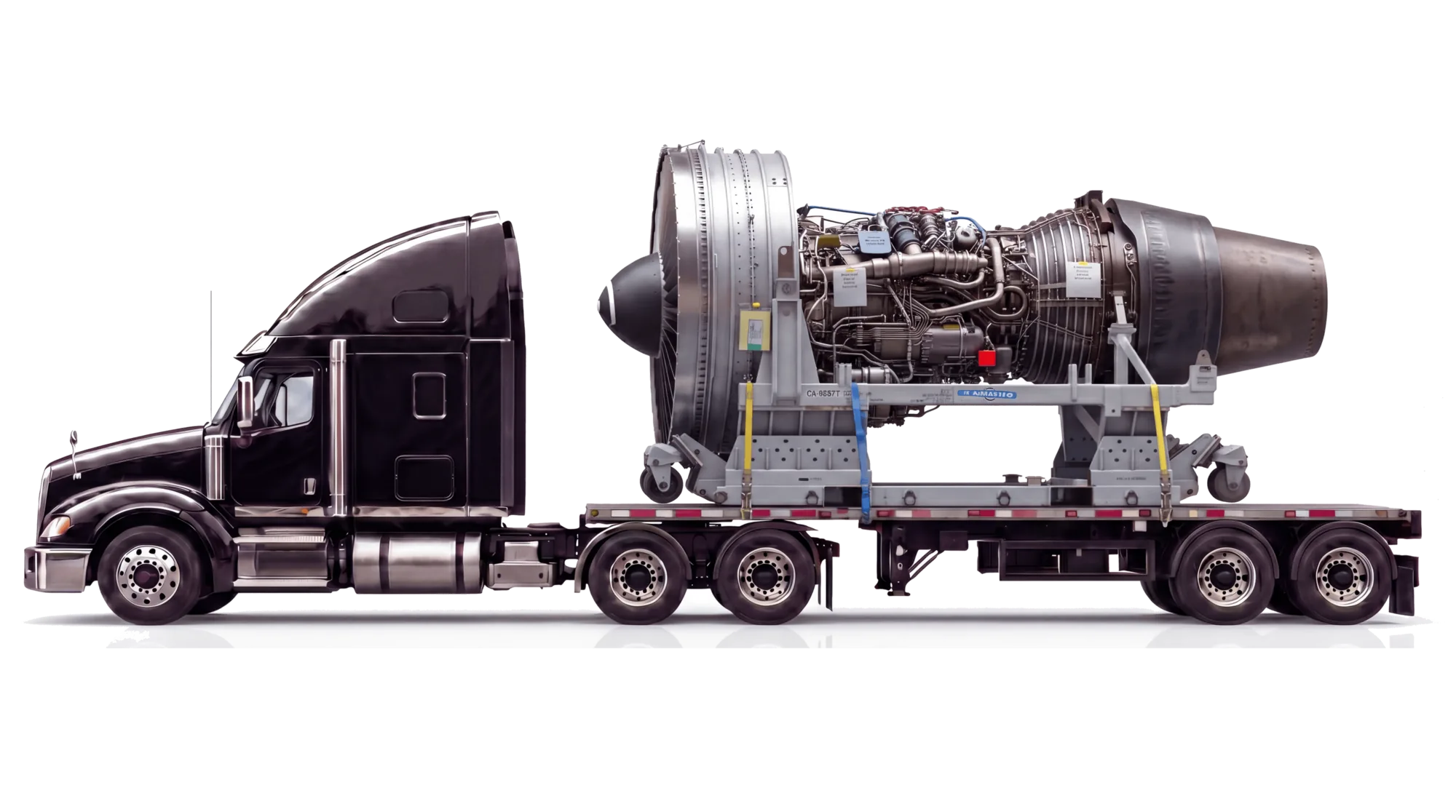
A lower deck for taller freight.
The main deck sits lower than a flatbed, adding clearance for equipment and crated cargo that would run over-height on a standard deck — so taller loads move legally without permits.
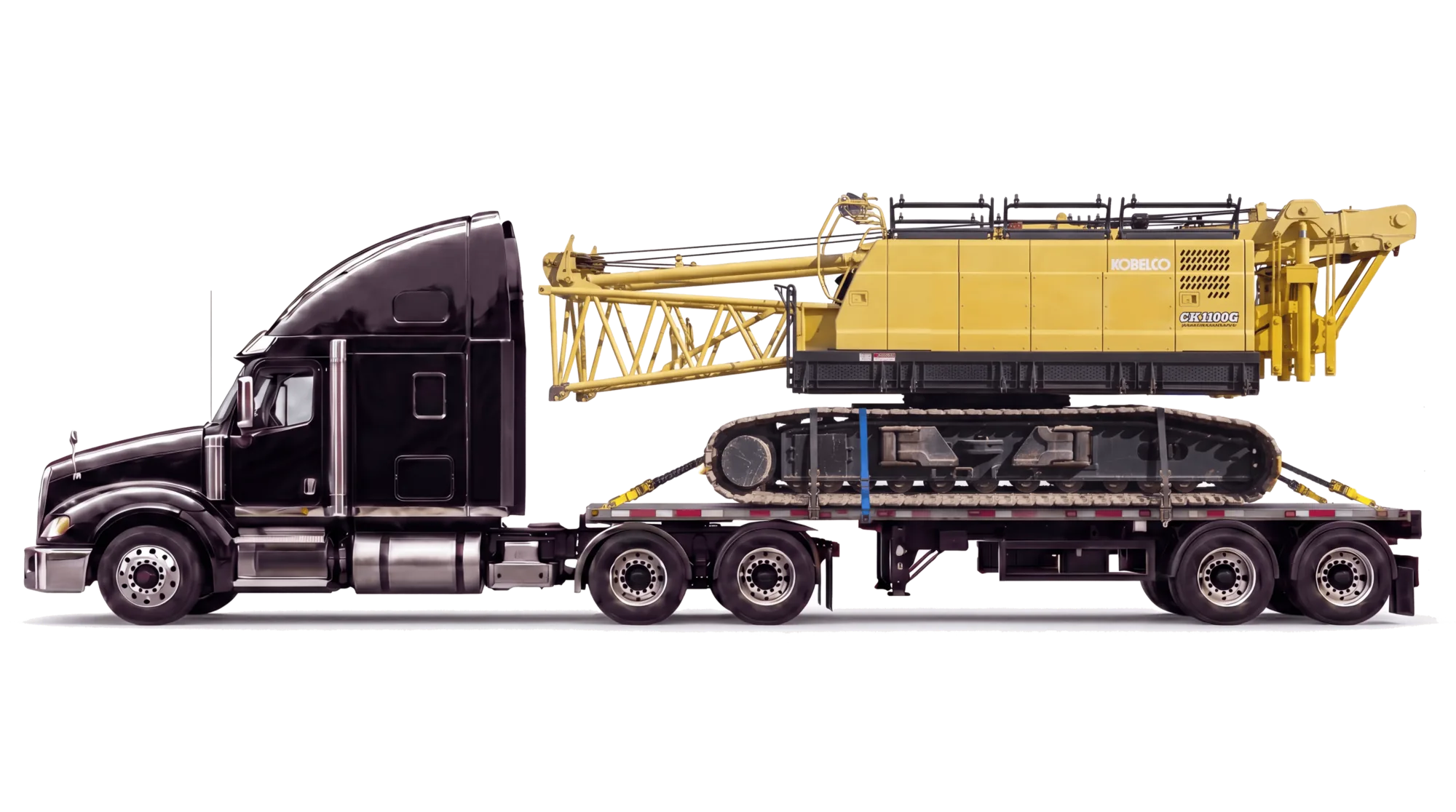
A low center well for over-height machinery.
The deck drops between the axles to carry tall machinery low to the road, keeping over-height freight under the bridges and wires along the route.
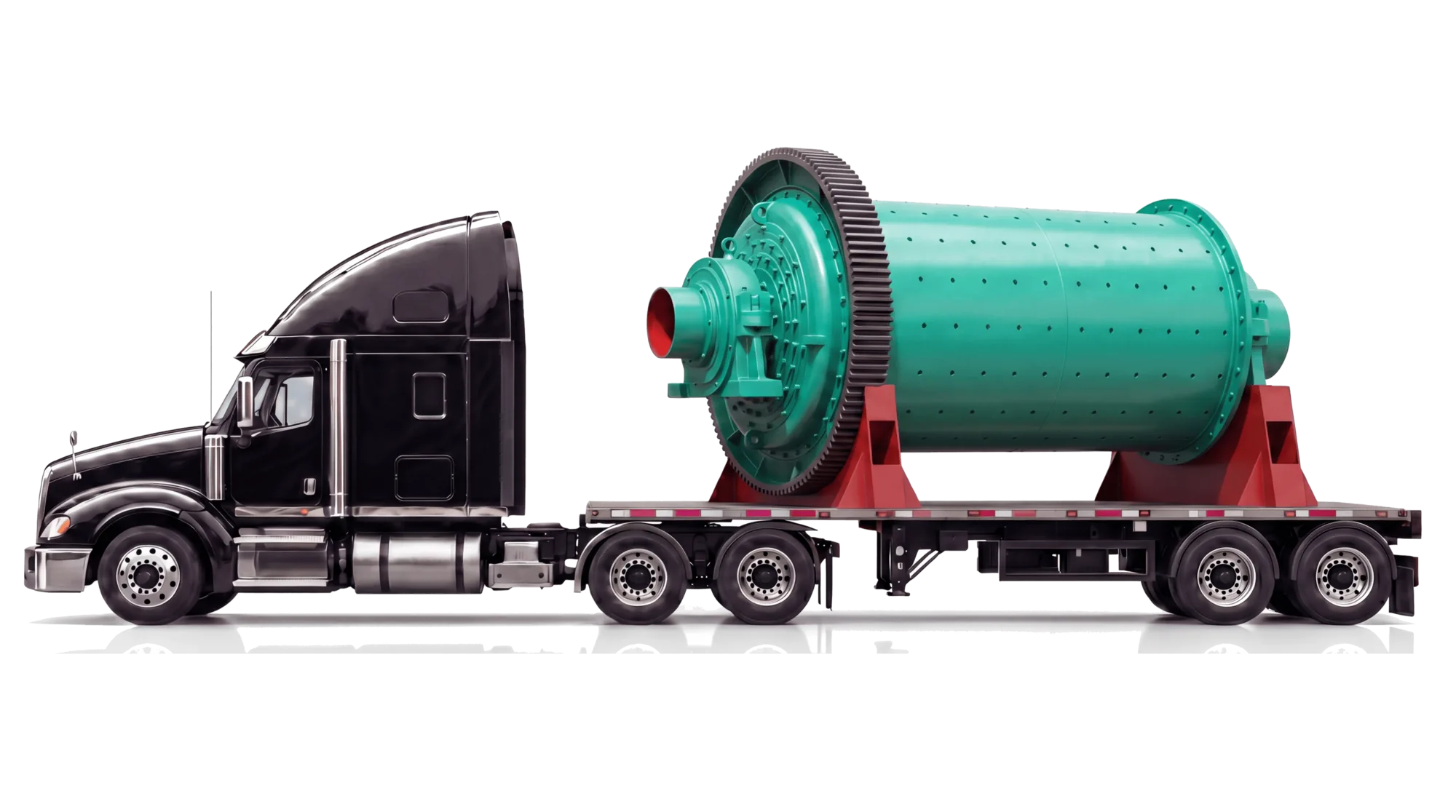
Removable gooseneck — equipment drives on.
The gooseneck detaches so excavators, cranes, and other tracked or wheeled equipment drive onto the deck under their own power. Configurable to around 150,000 lbs with added axles.
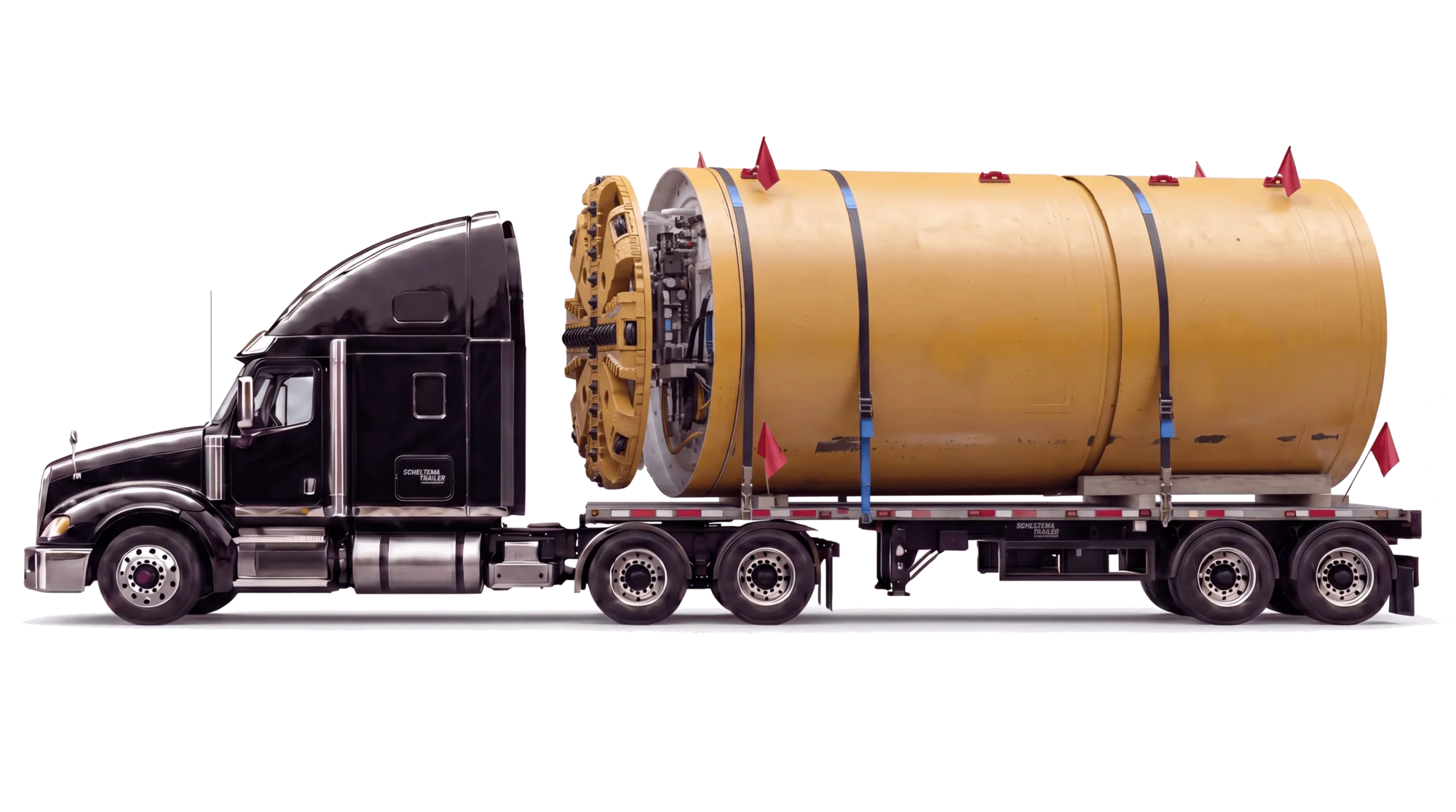
Axle lines added for the heaviest loads.
For freight beyond standard legal weight, added axle lines spread the load so it can be permitted and moved. The configuration is engineered to the piece and the route.
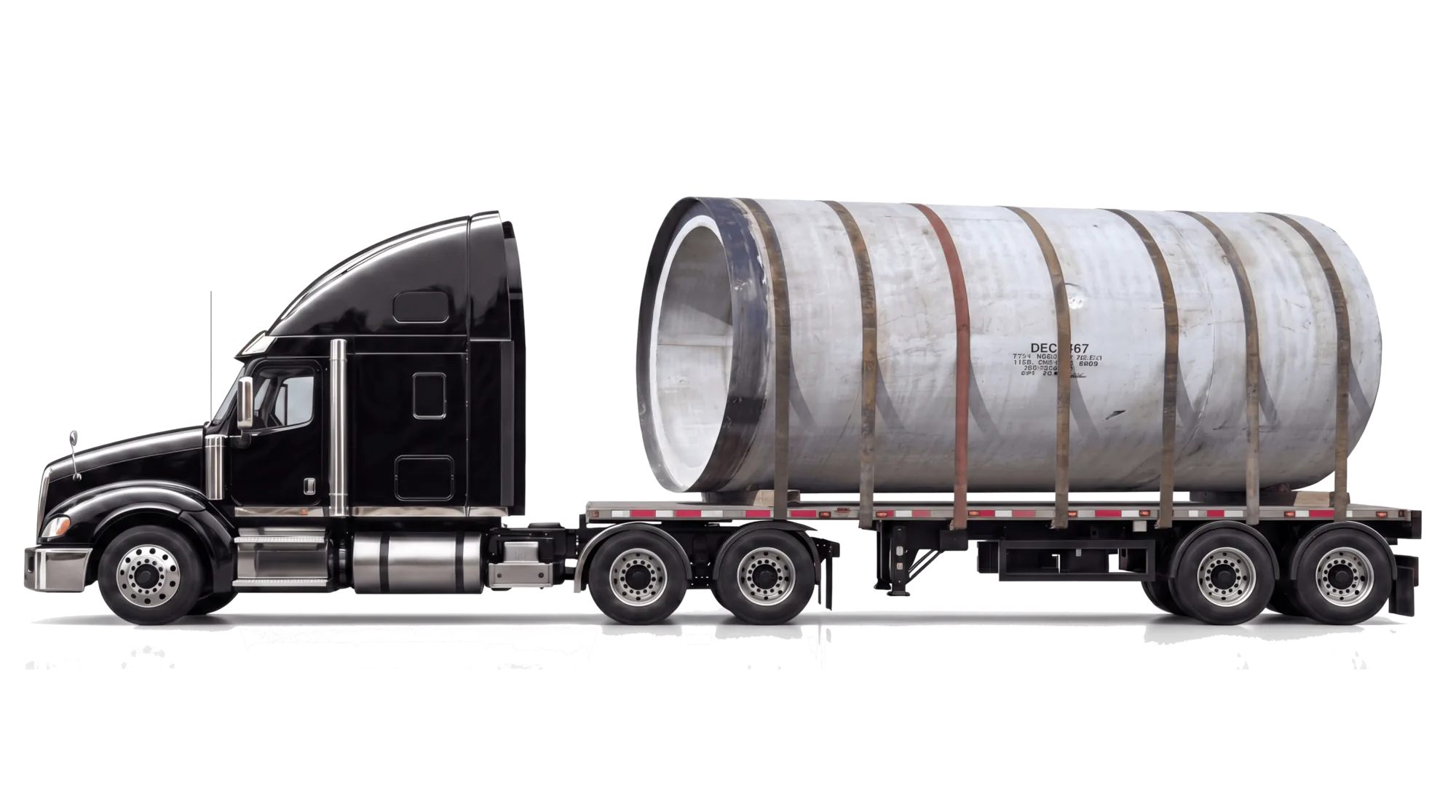
Decks that stretch for long freight.
Extendable flatbeds and step-decks stretch to carry beams, pipe, and other long freight that overhangs a standard deck, with permits and escorts arranged to match the length.
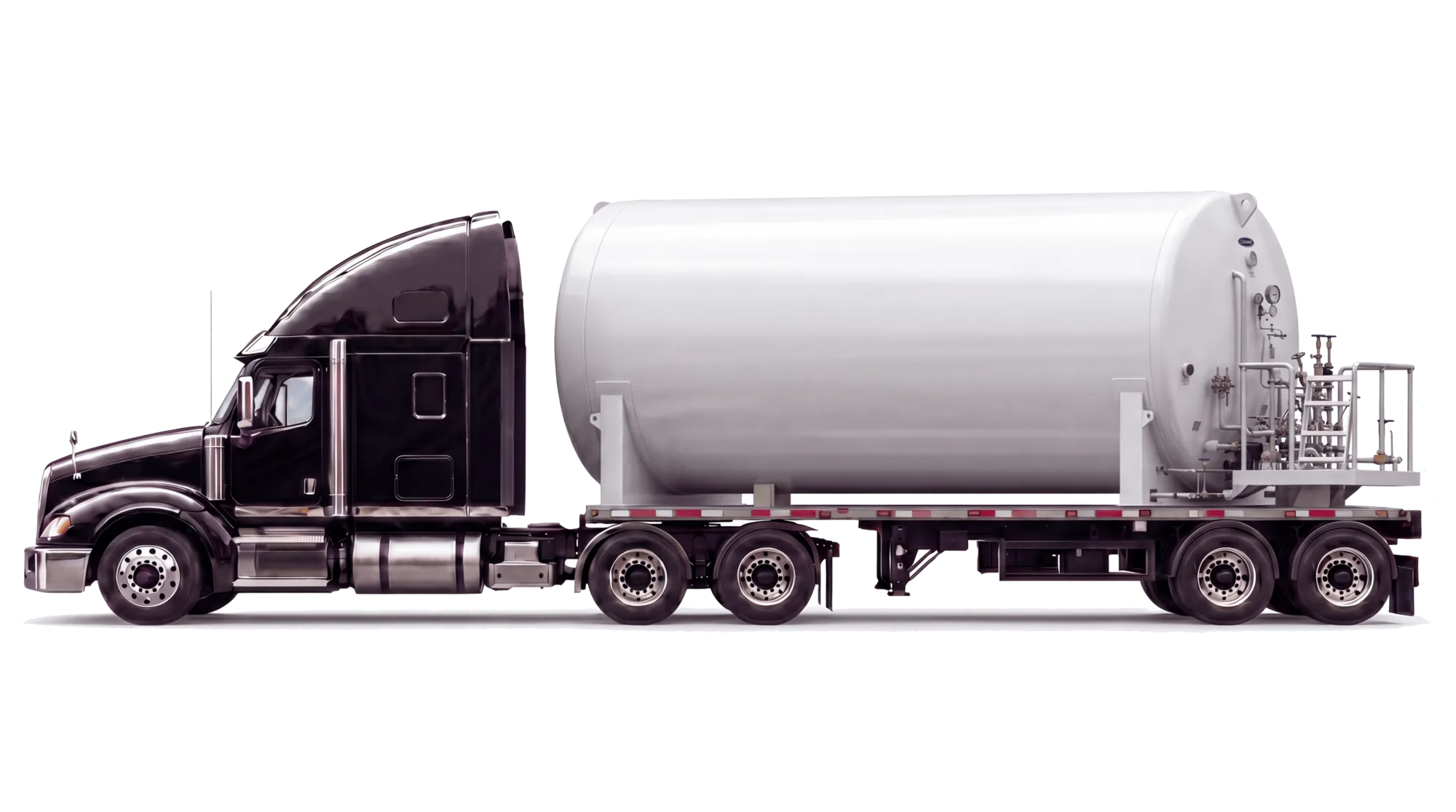
Purpose-built trailers for energy cargo.
Cryogenic tankers and purpose-built platforms carry LNG and other energy-sector cargo under the handling and safety protocols the freight requires.
Where marine freight moves, and what each region handles.
St. Lawrence yards and inland delivery from the Port of Montréal.
Inland delivery of marine equipment arriving through Pacific ports.
The core of this work — Halifax and Saint John shipyards and terminals.
Cross-border moves to US yards and Gulf coast facilities.
Marine work covers Coast Guard, Navy, and commercial shipbuilding programmes across Canada and the United States.
Our certifications and compliance5.0
4.9
5.0
4.9
5.0
4.8
All reviews to date are five stars, consistent with the 5.0 overall rating.
There are not enough words in the dictionary to describe how incredible this company is. I have been using them for well over a year, almost every day.
As a carrier, I’ve been doing business with Rite Way for over 7 years. Definitely one of the best brokers.
Rite Way Freight is very professional and organized. We’ve been working with them for 5 years.
Great services, unbeatable prices, hassle-free experience. They get it right every time.
Marine work starts or ends at a port, so these lanes are mostly the runs inland from the coast and between yards.
Pickup and delivery points are confirmed per load.
Meet our leadership team.

Zachary Khazzam
President
Zachary leads Rite Way Freight from its Montreal headquarters, overseeing a company built over nearly four decades on a simple idea: move the loads other carriers turn down, and stay with every one of them until it is delivered.
 Ryan SmithOperations Manager